On the 22nd of November, Opeth will release full-length number fourteen—which we have already reviewed, if you have not seen it. We sometimes “go ranking” here at Angry Metal Guy, but in the case of Opeth that just doesn’t convey the profound influence the band has had or the depth of the personal relationship that I—Angry Metal Guy—have with one of Sweden’s greatest metal and progressive bands. It is therefore in the spirit of the Iron Maiden from Worst to Be(a)st that this particular incarnation of the rankings has been conceived. But this time, I have invited El Cuervo to tag along. Enjoy this trip down memory lane. I look forward to fighting with you in the comments.

Angry Metal Guy
For me, Opeth played a major role in my development as a metalhead, as a fan of extreme metal and prog, and, of course, as a guitar player and songwriter. And they’re probably the band aside from Iron Maiden that I have called my favorite band most frequently throughout my life. While my fandom most certainly peaked around Ghost Reveries—having seen the band at least a half dozen times between their first US show at Milwaukee Metalfest and moving to Sweden myself—they continue to play a major role in how I think about music and how I interpret the modern metal scene.
On a personal note, I have also had the privilege of getting to spend time with the band in various ways. The first Swede I ever spoke Swedish to was Peter Lindgren, though I hardly knew a word at the time. I was recommended the absolutely legendary—to the point of being a cultural joke in Sweden—Jazz på svenska by Mikael Åkerfeldt on a bus one time when we were talking about folk metal. I once explored the basement at The Rave in Milwaukee with Fredrik Åkesson (then in Arch Enemy),1 Eric Hersemann (Gigan, ex-Hate Eternal), and my friend, the late Adam Sagan (Witherfall, White Empress, Circle II Circle, among others) on my birthday before I moved to Sweden. Since being in Sweden, I have become friends with the estimable Martin López of Soen, which I never imagined would happen.
All of this is to say that my connections to Opeth both emotionally and musically are stronger than just about any band in the world. That said, I don’t think that I have as nearly a so idiosyncratic view on Opeth as I did on Iron Maiden when I wrote the Worst to Beast posts. Unlike Iron Maiden, I was part of the metal consensus at the time that Opeth was releasing its most iconic material. I was swept away by Blackwater Park and was bummed when they announced that death metal was for losers before releasing Heritage. I have been on this rollercoaster ride in a way that I wasn’t for Maiden. And I love these guys and all the joy their music has given me over the years. Even as I’ve gotten older and more jaded about Åkerfeldt’s schtick, I can remember a time when I could say in all honesty that I could happily put their entire discography on shuffle and I wouldn’t have encountered a bad song. So, this is going to be an interesting exercise.
As usual, I have created tiers. So let’s start with…
Foregopeth

 #12. Sorceress (2016). One of the accusations lodged against critics of post-Watershed Opeth is that anyone who’s critical is just mad that they aren’t playing death metal anymore. While I liked Sorceress quite a bit when it was first released, this album has not aged particularly well in my ears. There are two primary reasons that it’s ended up being a letdown. First, as I pointed out at the time, the production was muddy, and when combined with the band’s “dedication to the blue note,” it ended up feeling like the most intentionally retro album that Opeth has ever released. But second, given that the album is quite angry—and given its ostensible oblique references to Åkerfeldt’s divorce, there’s an angry vibe here—Sorceress is the record where the accusation that critics don’t like it because it’s not death metal feels the most accurate. Moving away from metal makes Newpeth feel toothless at times. While Axe drops double kicks and Åkerfeldt drops Åkeriffs that seem at times reminiscent of the heavier material from Deliverance or Ghost Reveries, they just don’t usually punch through. When the band cranks up the intensity, that dog is all bark and has no bite whatsoever. With that in mind, I would probably downgrade this from very good to good, as I still enjoy it. And when these guys hit peaks—I like “Sorceress” quite a bit, but the real highlight for me is “Chrysalis”—I still enjoy this album. The songwriting is enjoyable, but it doesn’t quite carry with it those qualities that make the best Opeth records the best.

Watershed sounds (to this day) like a record that was written and produced by a very, very tired Mikael Åkerfeldt. Peter Lindgren, unsurprisingly, left the band in May of 2007, leading to Fredrik Åkesson’s debut on this album. As well, Martin Axenrot joined on drums and despite having played in the band since 2006, had not yet caught up to Lopez’s superb groove and feel. And Watershed sounds rushed. This is the most obvious in the fact that it is loaded with uninteresting, jarring transitions—which I generously referred to as Frippism’s in my review of Sorceress, but which I never found to be as mad or well-conceived as King Crimson. Between the jarring transitions, the studio tricks,4 and the sense that there was just a lack of enthusiasm for death metal throughout, I never understood why Watershed is considered by some Opeth fans to be such a masterpiece. When I initially bought the album, the cover version of “Den ständiga resan” was the song I liked the most. With time, I have softened on Watershed. There are moments of greatness scattered throughout, “Porcelain Heart” was a good single—and I love the clean vocal harmonies before the classic melancholic solo and the acoustic part—and “Burden” was a cock rock song, but it was a good one. I’ve often felt that with another six or nine months to percolate, Watershed would have been a better record.
Mediopeth
 #10. Deliverance (2002). It should come as no surprise that Deliverance is now understood to be an album where Opeth was riling in deep drama. Following the huge breakthrough of Blackwater Park, they were on a tight schedule and Åkerfeldt—in an act of supreme hubris—decided he was going to write not one, but two albums. And while that was a choice he could’ve made, it wasn’t a choice he had to make, especially given the kind of quick turnaround that they were on. On top of that, as the story goes, they entered the studio with essentially nothing ready to go. What transpired was an absolute nightmare of a recording session that would wound the band deeply and I have understood from what has been written in other places that it was sort of the beginning of the end of the band’s most iconic lineup.
And yet, Deliverance—while displaying some chinks in the armor for the first time in the band’s career—was still an absolutely wonderful, enjoyable success.5 Spawning classics like the title track—which makes fans squeal like pigs every time Opeth breaks it out—and “Master’s Apprentices,” which in retrospect feels like a preview of the style that Ghost Reveries would perfect, Deliverance was a record that reeked of greatness even when it was the result of one of the most absurd Night before the Test Cram Sessions that the world has ever seen. Being the worst of the band’s best material is a bit like playing in the Champions League,6 no one should doubt that you’re great. Shoutout to the clean part and the melodic solos in “By the Pain I See in Others,” I see you.
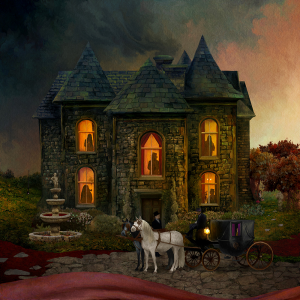 #9. In Cauda Venenum (2019). While not Oldpeth, In Cauda Venenum is a tremendous and interesting album of its own accord. Sure, in some ways, it continued the Sorceress journey toward feeling like a band out of time—lots of blues scales and that Bill Ward swing showing up throughout (“De närmast sörjande”). And yet, In Cauda Venenum is just such a thoughtful and fun record. And yes, I suppose that part of that has to do with the fact that I speak Swedish and so I was able to be charmed by the old interviews with Swedish children about God and death, but that’s reductive.7 The reality is that while Sorceress had a hard rock vibe to it, In Cauda Venenum felt like genuine prog; like Opeth was finally getting really good at working in the space that they had been trying to work in since 2011.8 Not only that, I have trouble seeing how people don’t just adore “Hjärtat vet vad handen gör” or “Minnets yta,” which find Opeth flexing muscles that I didn’t know they had. Or “Charlatan” which flexes old muscles in new, unique ways, and feels influential to the direction that The Last Will & Testament went. So, rather than feeling like a modern band making an old style of music, In Cauda Venenum oozes Opeth’s unique voice and charm—and this time, its lyrics weren’t scribbled on toilet paper between guitar takes. That sense of coherence is a feature hard to argue for when records like Watershed contain lyrics like “Do children cry / When mommy dies / And later in their lives / Will they throw their hands to the sky?” or whatever9—is part of what makes it such a strong record. In Cauda Venenum is a great, diverse, and thoughtful record and I think I like it more today than I did in 2019.
El Cuervo

 #11. Sorceress (2016). Never satisfied standing still, Sorceress sees Opeth striking out from a predecessor marked by its dedication to one particular sound (Pale Communion and 70s prog) while nonetheless remaining a natural successor. Åkerfeldt’s trademark approach to progressive rock here finds new bedfellows in blues and Swedish folk, from the fat grooves to the whimsical flutes. This forges a sound that remains unique in the band’s career, especially when presented with production that evokes the band wallowing in a muddy pool. The bubbly bass, robust drums, and bluesy guitars each rely on a warm, fuzzy tone that’s deeply indebted to (non-progressive) 70s rock, almost reaching the heady haze of stoner music. Sorceress doesn’t enjoy equal quality throughout, with clearer highlights and lowlights than most other Opeth albums, but it undoubtedly improves with repetition. And though it may not be my favorite Opeth release, I’ll be damned if it isn’t their best artwork.

 #9. Morningrise (1996). While its predecessor Orchid is no stranger to long songs, Morningrise stretched this young band to its limits with expansive, progressive compositions, including the longest song in their discography: the inimitable highlight titled “Black Rose Immortal.” It’s a record with fabulous moments but most tracks become meandering and drawn-out. And despite the general trend towards softer, balanced production through Opeth’s discography, Morningrise has a thinner, reedier texture than Orchid, positioning it closer to black metal than any other Opeth release. As much as I enjoy black metal it doesn’t quite fit their aesthetic for me, even if this texture lends it a unique feel in the band’s catalog. Despite its shortcomings, I still find Morningrise an entrancing experience; the detailed compositions, lengthy songs, and cyclical leads engender a rich atmosphere that feels unlike anything else. It was also the first indicator that Opeth was a band constantly seeking development and I will always commend progression.