

a Google sheet some kind of dark magic to produce an official guide to, and an all-around definitive aggregated ranking of, that band’s entire discography? Well, if that happened, we imagine it would look something like this…
The last time I went a’rankin’, it was for the impressive catalogue of disgustingly heavy and distinctly American, doomy death metal purveyors Incantation. We now turn our attention across The Pond to another legendary death doom band—heavy emphasis on the doom this time—that has existed almost exactly as long and has an equally impressive body of work to nitpick: My Dying Bride. Though both bands play “slower than usual death metal,” as the Brits in question have described it, in many ways their sounds couldn’t be more different. Far from grimy, My Dying Bride are romantics at heart. They’re the suave gentleman who shows up randomly at wakes, sidles up to the newly widowed and hits on them with macabre poetry like Gomez Addams wooing Morticia. Yes, they play death doom, but their gothic flourishes of piano and violin are elegantly crystalline. And as idiosyncratic as their music is, nothing distinguishes the band more than the unmistakable plaintive crooning of Aaron Stainthorpe.
If one were to name the top five most important doom metal bands of all time, they’d risk poser exposure by omitting these gloomy goths. Formed way back in 1990 by Calvin Robertshaw, Stainthorpe, Andrew Craighan and Rick Miah, My Dying Bride has since cycled through no fewer than 23 members across 34 years and 13 albums. Of the original lineup, Stainthorp and Craighan steadfastly keep the band alive and the bride in a perpetual state of near expiration. April 19th will see the release of their 14th LP, which I will be reviewing in the unfillable shoes of my beloved ranking partner and MDB superfan Grymm, but first, let’s revisit the last 13.
– Cherd
The Ranking
Cherd

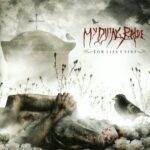 #12: For Lies I Sire (2009) – Twenty years and 10 records in, the law of diminishing returns began to drag the band down from behind.1 All the sounds that made them great before are still here, but their arrangement is uninspired when held up against the rest of their work. If one pretends this was the first MDB album, it holds up well enough, with “My Body, A Funeral” and “Fall With Me” standing on their own, but things begin to really drag with the tepid “Bring Me the Victory” and the record never fully recovers. Just as with Like Gods of the Sun, a major foray into new sounds was imminent, but Evinta would prove to be for hardcore fans only.


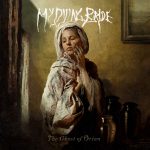 #8: The Ghost of Orion (2020) – This is one of the most straightforward doom records of the band’s catalogue. The morose tone is understandable given the band’s personal and professional challenges that led up to the release. The decision to double-track Stainthorpe’s vocals on all cleans may seem a bit odd, but it’s an aesthetic I think works, adding drama to an already great song like “To Outlive the Gods.” Sure, the more minimalist interlude songs could be shorter or cut, but I like the unhurried quality of the album as a whole. A solid effort for a band that had just turned 30 at the time.
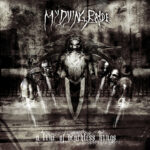 #7: A Line of Deathless Kings (2006) – The main accomplishment of A Line of Deathless Kings is proving that My Dying Bride can make a stock-standard My Dying Bride record and it can still be very good. You’d be forgiven for thinking this was going to be a more death-oriented chug-fest after hearing opener “To Remain Tombless,” but the most memorable songs here bring the dee-double-oh-em DOOM, with gigantically sad cuts like “L’Amour Detruit” and “Thy Raven Wings.” Lyrically this is one of the more “Hey baby, come to this cemetery often?” releases by the band, although when it comes to that, it’s all relative.
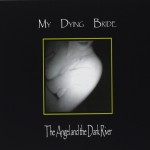 #6: The Angel and the Dark River (1995) – Surprised to see it this low? I’m well aware that general consensus says this belongs anywhere in the top two or three slots when considering My Dying Bride’s output. Look, It’s a fine album, and unique in the band’s catalogue. It has some classic MDB cuts. I just don’t love it. Partly, this has to do with Stainthorpe not only abandoning harsh vocals completely, but also adopting a kind of yelping affect to his spoken/sung delivery that would take a few albums to iron back out. Partly this has to do with the bone-dry production. Plus, it doesn’t help that the band’s first truly bad song appears here with “Two Winters Only.”2 Still, “The Cry of Mankind” and “From Darkest Skies” are peak MDB, and the record is loved for a reason.

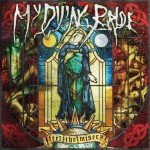 #4: Feel the Misery (2015) – I tend to really like My Dying Bride records when guitarist Andrew Craighan is the main songwriter, as the next two entries will attest to. He’s great at balancing the various sounds that make the band who they are without letting any dominate, which means there’s drama, but not supine-on-a-fainting-couch-with-wrist-to-forehead drama the band can sometimes veer into. There are great riffs and smooth transitions everywhere, and no band overview would be complete without songs like “And My Father Left Forever” and “I Almost Loved You.”

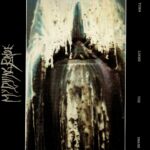 #2: Turn Loose the Swans (1993) – Elegiac. Sweeping. Intimate. Aaron Stainthorpe and company shocked the heavy music underground with a transcendent work of delicate atmosphere, forlorn clean vocals, and muscular death doom that could barely be expected after their debut. It’s amazing that such blown-open, cinematic songs could have so many corners and nooks hiding surprising sounds. Synthesized trumpets here, violin and piano there, a sudden shift in vocal delivery, and bookend tracks that featured no drums or guitar at all. Turn Loose the Swans is one classic song after another of stately melancholy, with “Your River,” “The Crown of Sympathy,” and the title track all in the conversation for greatest doom cut of the 90s.
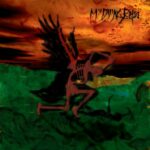 #1: The Dreadful Hours (2001) – Every bit the musical journey that Turn Loose the Swans is, The Dreadful Hours comes out on top thanks to the superb songwriting and the fact that it contains the heaviest passages in My Dying Bride’s oeuvre. The one-two punch of the opening title track and “The Raven and the Rose” represent all the best aspects of the band’s gothic death metal, with echoing atmospherics, regal riffing, and Stainthorpe’s most vulnerable cleans and accomplished death growls in turn. From there the album settles into one emotional gut punch after another, each distinct enough that the 70-minute runtime passes without tedium, before culminating in a re-recording of the band’s debut record standout “The Return of the Beautiful.” There are those who consider this redundant, but I see it as proof that the band themselves sensed this one was special and required a symbolic act of consummation.
Grymm
As an impressionable teenager in the 90s, there were a lot of bands that pushed boundaries and carved paths that many would follow throughout the decades. Many have come and gone, drastically changed genres, or have gotten worse over the years. However, very few have not only followed their own downtrodden drumbeat, but resonated as loudly or deeply with yours truly as British doomsayers My Dying Bride. No one could encapsulate the varying degrees of sadness, whether that sadness is vigilant, bitter, triumphant, seductive, or just outright horny, quite like the Halifax sextet. Halfway into their fourth decade as a band, and with their newest, A Mortal Binding, just around the corner, today’s a great day to rank their discography.
#12. For Lies I Sire (2009). Ah yes, the album which trumpeted the return of the beautiful violins into the band’s repertoire. I remember that revelation being a big deal at the time, and I was looking forward to hearing them again. Sadly, those violins are the only thing memorable about For Lies I Sire, as other than the powerful opener “My Body, A Funeral” and immediate follow-up “Fall With Me,” it’s difficult to recall much of the album if I’m being pressed to name a moment besides those mentioned. While not terrible, it did suffer from being a bit too interchangeable within itself and the later-mid period releases.
#11. A Line of Deathless Kings (2006). Another album that suffered from a bit too much of running-in-place in terms of songwriting, A Line of Deathless Kings props itself up a little by containing quite a few bangers. “To Remain Tombless” is one of the best openers that My Dying Bride penned, which is no small feat considering that the ‘Bride are known for strong opening tracks. “Deeper Down” could get a good pit going, and “Thy Raven Wings” is a hell of a somber, powerful song featuring some of Aaron Stainthorpe’s best performances. It’s just all pulled deeper down by repetitive songwriting (“One of Beauty’s Daughters”) and the need for better overall flow (“The Blood, the Wine, the Tears”).
#10. The Ghost of Orion (2020). This… hurts to even talk about. To put it plainly, My Dying Bride was going through some majorly heavy shit during this time. Between one-third of the band leaving with little-to-no notice before the album’s recording,5 and Stainthorpe taking a step back from the band to care for his young daughter, who was struck with (and has since thankfully recovered from) cancer at the time, it’s a wonder the band was able to carry on at all. With “Your Broken Shore” and “Tired of Tears” carrying the heavy load on an album that was almost half-populated with interludes, The Ghost of Orion sounded like a band that just wanted to catch a break and recover from the most difficult of trials life threw at them.
#5. The Dreadful Hours (2001). With (then-) new guitarist Hamish Glencross in tow, The Dreadful Hours would see the band dipping their toes into more progressive waters, while still retaining their trademark death/doom origins, with (mostly) impressive results. The self-titled opener remains, to this day, one of the most miserable openers the band has ever penned, with Glencross and Craighan trading off somber melodies and hefty riffs, and Stainthorpe sounding absolutely downtrodden and broken on the mic. “The Raven and the Rose” is a fantastic follow-up, with more ferocious riffing, and tremendous twin guitar melodies intertwined. Elsewhere, “My Hope, the Destroyer” would be a live staple for years to come. With the exception of the unnecessary remake of “Return of the Beautiful” (here called “Return to the Beautiful”), The Dreadful Hours would continue to bring MDB back from the brink of dissolution.
#3. Feel the Misery (2015). I was saddened and shocked in 2014 when word got out that Hamish Glencross was fired from My Dying Bride. However, when news that his replacement would be none other than co-founder Calvin Robertshaw, I approached their follow-up to A Map of All Our Failures with some trepidation. Feel the Misery was like a warm “Welcome Back!” from a dear, old friend, as all the elements that made My Dying Bride great were present and accounted for. Mournful melodies, dreary vocals, and a sad, wretched atmosphere elevated late-career classics like “And My Father Left Forever,” the beautiful “I Almost Loved You,” and the catchy title track. Granted, it would be the final album to feature Robertshaw or drummer Shaun Taylor-Steels, but it was great while it lasted.
#2. The Angel and the Dark River (1995). The impact this album would have on my musical tastes and love for doom metal can’t be understated. When this album first came out, I simply wasn’t prepared for the level of misery, heft, creativity, or beauty that The Angel and the Dark River contained. Between the somber elegance of “A Black Voyage,” the emotional heft of “Two Winters Only,” or the creative genius and masterful songwriting found in the epic opener, “The Cry of Mankind,” The Angel and the Dark River remains one of my all-time desert island albums, and must be experienced by anyone even remotely in love with doom metal or gothic music.
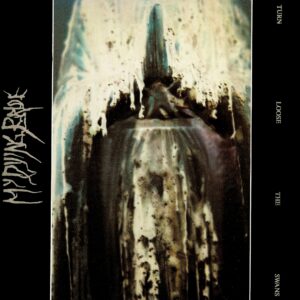 #1. Turn Loose the Swans (1993). I go back and forth between the top two albums in terms of what I classify as the very best of My Dying Bride’s discography. While The Angel and the Dark River has “The Cry of Mankind,” easily the best and greatest song My Dying Bride has ever penned and a cornerstone in gothic doom metal, Turn Loose the Swans pushed more envelopes and felt like a whole package overall. From the beautiful opener in “Sear Me MCMXCIII,” the sweeping epics “Your River” and “Crown of Sympathy,” to the somber and reflective closer, “Black God,” Turn Loose the Swans felt complete. It sounded like no other words needed to be said, no other notes had to be added or taken away, or any embellishments to be thrown in. There’s a reason why so many people have so many incredible memories of this classic (myself included), and that’s why Turn Loose the Swans deserves the top spot.
AMG’s Official Ranking:
Possible points: 26
#13: 34.788…Complete (1998) 2 points
#12. For Lies I Sire (2009) 4 points
#11. Like Gods of the Sun (1996) 8 points
#8. (tied) A Map of All Our Failures (2012) 10 points
#8. (tied) The Ghost of Orion (2020) 10 points
#8. (tied) A Line of Deathless Kings (2006) 10 points
#7. Songs of Darkness, Words of Light (2004) 15 points
#6. As the Flower Withers (1992) 16 points
#5. The Light at the End of the World (1999) 19 points
#4. The Angel and the Dark River (1995) 20 points
#3. Feel the Misery (2015) 21 points
#2. The Dreadful Hours (2001) 22 points
#1. Turn Loose the Swans (1993) 25 points
Please enjoy this complimentary playlist for the My Dying Bride beginner, featuring a pair of songs from each of their full-lengths, chosen with lots of love and just a little bit of lechery by Cherd and Grymm.


